Ancient Groves and Heirloom Pressings: A Tuscan Olive Harvest
A journey through the steep terraced hills of Chianti during the crucial three-week picking window that defines Tuscan green gold.
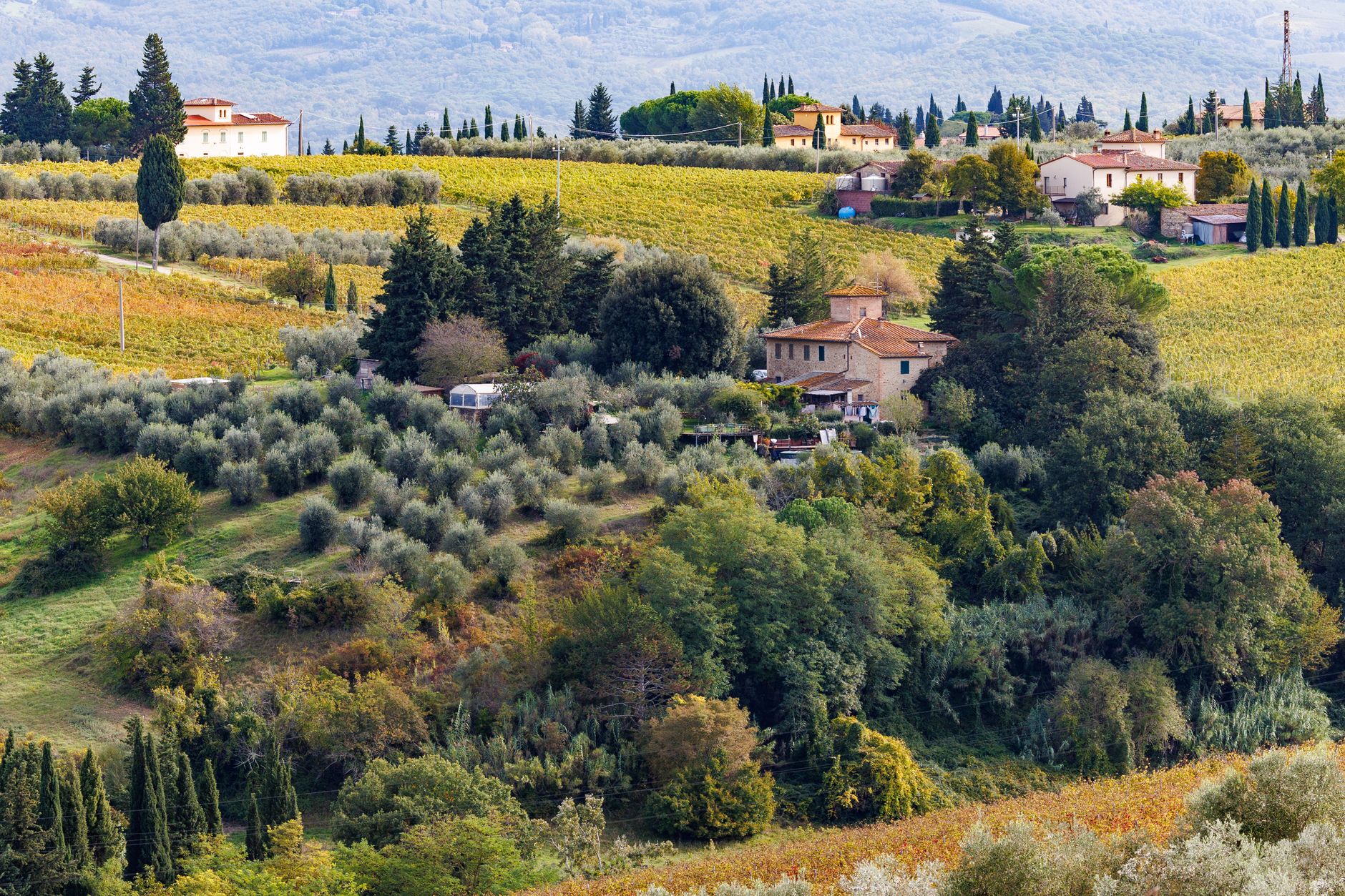
Before dawn in Greve in Chianti, the mist hangs thick in the valleys, smelling of wet limestone and decomposing oak leaves. Underneath ancient Frantoio and Moraiolo olive trees, broad orange netting is stretched across terraced clay soils in readiness for the annual harvest.
The Net & The Ladder
Industrial mechanical harvesters cannot navigate these 35-degree inclines. Picking remains an intensely manual choreography. Handheld pneumatic rakes comb through the branches, causing the small green drupes to rain down onto the nets with a sound like summer hail.
For small-scale family estates, timing is unforgiving. To harvest when the fruit is fully purple yields higher volume but sacrifices polyphenols and aromatic complexity. Early picking—when over half the fruit is still emerald green—yields an oil that is fiercely piquant, herbaceous, and intensely durable.
"Great olive oil is not an ingredient you pour; it is a freshly squeezed fruit juice that carries the memory of rain and summer sun."
Inside the Frantoio
Within four hours of being shaken from the branch, the olives arrive at the stone frantoio. Modern high-end pressings abandon stone wheels in favor of sealed vacuum malaxers that prevent oxidation. The temperature of the paste is kept strictly under 27 degrees Celsius—the definition of true cold extraction.
The Pepper & The Toast
Freshly drawn Tuscan oil is almost fluorescent in its green hue. Poured generously over thick slices of toasted unsalted country bread rubbed with a single clove of garlic, it provokes a signature tickle at the back of the throat—a physical verification of high antioxidant concentrations.
This tradition is more than culinary luxury; it is the living tapestry that sustains rural Tuscan valleys, preserving historic dry-stone terraces and safeguarding old agrarian lineages.